http://www.kwintessential.co.uk/resources/global-etiquette/brazil-country-profile.html
http://www.internationalpropertyworld.com/brazil-guide/brazilian_traditions.htm
http://www.everyculture.com/Bo-Co/Brazil.html
http://www.un.int/brazil/brasil/brazil-education.htm
http://ezinearticles.com/?5-Things-Brazil-is-Famous-For&id=3220324
http://riogringa.typepad.com/my_weblog/2010/02/disneyland-brazil.html
http://www.transparent.com/portuguese/beto-carrero-world-brazils-biggest-theme-park/
Thursday, December 9, 2010

Changes brought by growth in tourism, and how tourism has changed culture and traditions.
Firstly, the growth in tourism has obviously and most definitely brought in money for the country and improved the standard of living in the country. As a result, the locals would benefit from the boost in economy, more job opportunities would be available, and the increase in investors' interests in Brazil would probably bode well for the country as well. Coupled with all these, Brazil's reputation would be boosted as well, be it by word of mouth from the tourists who enjoyed their time in Brazil or the developments and international events happening in the country, any boosting of reputation for Brazil would only mean more tourism receipts and revenue earned for the country.
All we have heard are the good points. Now, for the bad points.
Perhaps it is only ironic that the more tourists coming into Brazil, the better the country would have to do to ensure that they either enhance or retain their reputation. Yes, it is possible for the country to boost their reputation by having more tourists in the country but everything can crash back at them if things go wrong. It is only made worse by the already high expectations from the tourists and this puts pressure on the government and country. With the number of tourists coming into Brazil every day, it is certain that culture in the country would be affected. Youths and children might be influenced by the tourists coming into the country and aim to follow their way of life, which is different from theirs. That will cause a loss of culture and in the long run, would be detrimental to Brazil's proud culture roots and thus, the government would have to do something about it to minimize the impact.
It might not seem possible but the effects of tourism has even gone to the indigenous groups, whose homes have been destroyed to build roads for the unsatiable hunger of tourism. Transportations would definitely be needed for tourists to travel around the country and it is only saddening that the Amazon rainforest, the biggest rainforest in the world, would have to suffer as a result of globalisation and tourism.
Lastly, commodification of Brazil cultures and traditions is also an issue. As mentioned earlier, tourists travelling to Brazil can simply purchase a souvenir from one of the shops there and declare to all his/her friends that he/she has been to Brazil. In this way, Brazil is just that, a souvenir. However it is quite obvious that that isn't the case and as such, Brazil's culture and tradition is being commodified into a single souvenir, making it less extravagant and rich as it should be. People travel to Brazil just for festivals and for some cases, the theme park, Beto Carrero. In their minds then, everything is fake, only the festival and theme park is real because I have heard of them and is just only interested in experiencing them, nothing else. How Brazil overcome this problem, we can only wait and see..
All we have heard are the good points. Now, for the bad points.
Perhaps it is only ironic that the more tourists coming into Brazil, the better the country would have to do to ensure that they either enhance or retain their reputation. Yes, it is possible for the country to boost their reputation by having more tourists in the country but everything can crash back at them if things go wrong. It is only made worse by the already high expectations from the tourists and this puts pressure on the government and country. With the number of tourists coming into Brazil every day, it is certain that culture in the country would be affected. Youths and children might be influenced by the tourists coming into the country and aim to follow their way of life, which is different from theirs. That will cause a loss of culture and in the long run, would be detrimental to Brazil's proud culture roots and thus, the government would have to do something about it to minimize the impact.
It might not seem possible but the effects of tourism has even gone to the indigenous groups, whose homes have been destroyed to build roads for the unsatiable hunger of tourism. Transportations would definitely be needed for tourists to travel around the country and it is only saddening that the Amazon rainforest, the biggest rainforest in the world, would have to suffer as a result of globalisation and tourism.
Lastly, commodification of Brazil cultures and traditions is also an issue. As mentioned earlier, tourists travelling to Brazil can simply purchase a souvenir from one of the shops there and declare to all his/her friends that he/she has been to Brazil. In this way, Brazil is just that, a souvenir. However it is quite obvious that that isn't the case and as such, Brazil's culture and tradition is being commodified into a single souvenir, making it less extravagant and rich as it should be. People travel to Brazil just for festivals and for some cases, the theme park, Beto Carrero. In their minds then, everything is fake, only the festival and theme park is real because I have heard of them and is just only interested in experiencing them, nothing else. How Brazil overcome this problem, we can only wait and see..
Disney in Brazil?!?


Another form of disneyfication would be the Beto Carrero World, which is Brazil's largest theme park. It is similar as Disney World in the way that there are different areas of the theme park and each area is themed differently. The theme park offers attractions like a roller coaster, ferris wheel, and even a castle. Like disney, the park offers various shows throughout the park and even has a zoo with over 700 animals. Coupled with a rumoured Disneyland coming up in Brazil on 2016, disneyfication is definitely happening in Brazil.

Lastly, another form of disneyfication would be the soccer team. It can be said that the national team are a form of tourist attraction themselves as the former world champions are arguably one of the best soccer teams to grace the international footballing stage and looks set to continue to do so. Like mentioned above, Brazil, is not just about the soccer team itself.
Brazil is known for...5 main things
Soccer.
 Brazil has won the most world cup soccer tournaments then any other country on earth. Every other country in the world has to scratch and claw their way just to make it into the world cup, but every four years, the Brazilian team makes it to this world class tournament without even breaking a sweat. Soccer stars such as Pele, Ronaldo, and Ronaldinho, as well as the countries entire soccer culture have made Brazil synonymous with the sport.
Women.
 Brazilian models are some of the most sought after models in the world. Very few countries have more top models then Brazil. Examples include Giselle Bundchen, Adriana Lima, Alessandra Ambrosio, Isabeli Fontana, Raica Oliveira, Jeisa Chiminazzo, Ana Claudia Michels, Ana Beatriz Barros, Fernanda Tavares, Fernanda Motta, Ana Paula Araujo, and Aline Nakashima, just to name few, but it's not just the super models that make Brazilian women famous the world over. It also includes the beautiful women that take part in Carnival, as well as the beach bunnies that line the beaches of Brazil with their amazingly skimpy bikinis, drawing the attention of men from all over the world.
Carnival.
 The Brazilian Carnival is well known all around the world as the world's largest and most festive party. The Brazil carnival is the most popular Brazilian festivity, far beyond Christmas, Easter or New Year celebrations. Only the Rio de Janeiro New Year's Eve rivals with Carnival. It is said that you must attend the Brazilian carnival at least once in your life.
The Amazon.
 Brazil contains approximately 60% of the Amazon rainforest. The Amazon represents over half of the planet's remaining rainforests, and it comprises the largest and most species-rich tract of tropical rainforest in the world. The Amazon rainforest was short-listed in 2008 as a candidate to one of the New7Wonders of Nature by the New Seven Wonders of the World Foundation.
Samba and Capoeira.
 Brazil is a country of mixed ethnicities. Capoeira is an Afro-Brazilian art form that combines elements of martial arts, music, and dance. It was created in Brazil by slaves brought from Africa. Capoeira, coupled with the Samba music and dance, have made their way into various movies, documentaries, music videos, and other main stream media.

Women.

Carnival.

The Amazon.

Samba and Capoeira.

Leisure time!
If I were to describe every sort of leisure programme available in Brazil, I would take forever so I will just mention a few here, the more...popular ones I may say.
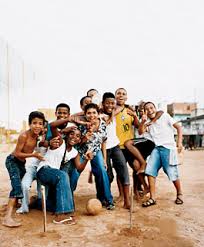 The most popular form of leisure programme would obviously be soccer. The Brazilians' passion for soccer has never been in doubt ever since the sport was introduced. Arguably, some of the best soccer players have come from Brazil, and will continue to as passion for the game grows. Children, in their leisure time, would just meet up and play kick-about with their friends.
Another popular form of leisure programme would be just heading down to the beach for a day of relaxation/sports, whichever you prefer. Either way, it would be on the famous Brazilian beaches, where white sand, beautiful waves and great scenery work together to blow your day away.
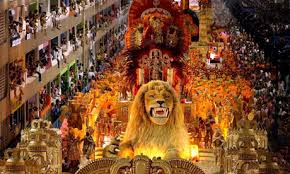 In terms of festivals, Brazil is probably one of the most active and lively in organising and holding festival events. Perhaps the most well known and significant event would be the Carnival which is held in Rio de Janeiro on February every year. During the event, locals and tourists party all night long to live music, local processions and brazilian samba. Making it a must see event for those participating and those spectating alike.
 The most popular form of leisure programme would obviously be soccer. The Brazilians' passion for soccer has never been in doubt ever since the sport was introduced. Arguably, some of the best soccer players have come from Brazil, and will continue to as passion for the game grows. Children, in their leisure time, would just meet up and play kick-about with their friends.
Another popular form of leisure programme would be just heading down to the beach for a day of relaxation/sports, whichever you prefer. Either way, it would be on the famous Brazilian beaches, where white sand, beautiful waves and great scenery work together to blow your day away.

Brazilians!

In addition, Brazilians will also understand some Spanish to various degrees due to the similarities of Spanish and Portugese.
Similar to mother tongue in Singapore, Brazilians are taught Portugese in school since young. The other core subjects taught are Social Studies including History and Geography, Physics and Biology Science, and Mathematics. This will bring us to the next point, the modes of education in Brazil.
The Brazilian Educational System is divided into three levels : fundamental, intermediate, and higher education (comprising two different levels : undergraduate and graduate). There is also preschool and infant education offered. Any youth or adult who did not follow or finish regular schooling at the appropriate age has the possibility of making up for the delay by attending courses and suppletory examinations customizing the mode of education to this special type of student.
The regular school year in Brazil, independently of the calendar year, covers a minimum of 180 days of effective work, excluding tests and exams, according to the current Education Law. The new National Education Bases and Guidelines Law establishes 200 school days.
Fundamental Education : 7-14 years old (compulsory)
Intermediate Education : 15-18/19
Next up, type of leisure programmes.
Indigenous groups in Brazil
Brazil has about 200 indigenous tribes living within the country. At last count, there are about 519000 declared indigenous people, which is about 0.4% of brazil's total population. in 1997, the indigenous population was largely killed off by the Europeans, declining from a population of millions to 300,000. However, since then it has been going well, and the indigenous people have made substantial and pervasive contributions to the world's medicine with knowledge used today by pharmaceutical corporations, material and cultural development—such as the domestication of cassava and other natural foods.
Here are some of the major indigenous groups :
Xavante
The Xavante are an indigenous people, comprising some 9,600 individuals within the territory of eastern Mato Grosso state in Brazil. They speak the Xavante language, part of the Jé language family

Yanomamo
The Ya̧nomamö are a large population of indigenous Amerindian people in South America. They reside in the Amazon rainforest, among the hills that line the border between Brazil and Venezuela. Due to the remoteness of their residence, they had remained largely uncontacted by the outside world until the beginning of the 20th century.
Here are some of the major indigenous groups :
Xavante
The Xavante are an indigenous people, comprising some 9,600 individuals within the territory of eastern Mato Grosso state in Brazil. They speak the Xavante language, part of the Jé language family

Yanomamo
The Ya̧nomamö are a large population of indigenous Amerindian people in South America. They reside in the Amazon rainforest, among the hills that line the border between Brazil and Venezuela. Due to the remoteness of their residence, they had remained largely uncontacted by the outside world until the beginning of the 20th century.

Kaingang
The Kaingang (also spelled caingangue in Portuguese or kanhgág in the Kaingang language) people are a Native American ethnic group spread out over the four southern Brazilian states of São Paulo, Paraná, Santa Catarina and Rio Grande do Sul.

Culture of Brazil
Hello again!
This time, we'll be talking about the culture and tradition of Brazil instead.
Brazil have a multi-ethnic population which consists of white 53.7%, mulatto (mixed white and black) 38.5%, black 6.2%, other (includes Japanese, Arab, Amerindian) 0.9% and lastly, unspecified 0.7%
Some culture facts about Brazil...
- Brazil is a mixture of races and ethnicities, resulting in rich diversity.
- Many original Portuguese settlers married native women, which created a new race, called 'mestizos'.
- Mulattoes' are descendents of the Portuguese and African slaves.
- Slavery was abolished in 1888, creating over time a further blurring of racial lines.
- Unlike many other Latin American countries where there is a distinct Indian population, Brazilians have intermarried to the point that it sometimes seems that almost everyone has a combination of European, African and indigenous ancestry.
- The family is the foundation of the social structure and forms the basis of stability for most people.
- Families tend to be large (although family size has been diminishing in recent years) and the extended family is quite close.
- The individual derives a social network and assistance in times of need from the family.
- Nepotism is considered a positive thing, since it implies that employing people one knows and trusts is of primary importance.
- Despite the mixing of ethnicities, there is a class system in Brazil.
- Few Brazilians could be described as racist, although social discrimination on the basis of skin colour is a daily occurrence.
- In general, people with darker brown skin are economically and socially disadvantaged.
- The middle and upper classes often have only brief interaction with the lower classes - usually maids, drivers, etc.
- Class is determined by economic status and skin colour.
- There is a great disparity in wage differentials--and therefore lifestyle and social aspirations--among the different classes
- Although women make up 40% of the Brazilian workforce, they are typically found in lower paid jobs such as teaching, administrative support, and nursing.
- The 1988 constitution prohibits discrimination against women, but inequities still exist. The one place where women are achieving equality is in the government.

Some traditions of Brazil...
- Capoeira is a Brazilian martial art practised widely, but whose origins lie with the African sections of the populace. Black slaves learnt the art as a means of self-defence and self-discipline to help tolerate the tough lives they led under the plantation owners.
- Soccer is a sport which, although invented in Britain, has found popularity worldwide and in particular in Brazil. Arguably, some of the best teams and players the sport has ever seen have come from Brazil. Heroes such as Pele have inspired generations of poor yet passionate Brazilians to take up the sport and dream of achieving success.
- Brazil is predominantly a Catholic country, but the diversity of its people often manifests itself in a unique mix of religious practises, such as Candomble for example. This is a fusion of African and Catholic religious doctrine and is only found in Brazil.
- Brazil is famous for its carnivals and celebrations, again representing the fusion of African, Portuguese and native Indian cultures. Lemanja is a celebration observed by followers of the Candomble religion. Thousands of worshippers line the beach at Copacabana in Rio de Janeiro to give thanks to the goddess of the seas. They wear white and offer flowers and gifts by placing them in the sea. Salvador is the location for Boa Morte, a three day religious celebration combining music, dance and religion. The name literally translates as “Beautiful Death”.
- The Samba is a distinctively Brazilian style of music and has its historical roots in the traditions of the Bantu people who came to Brazil from Angola in Africa. Samba music is characterised by a strong beat accompanied by a guitar and has influenced other forms of Brazilian music such as Bossa Nova. It remains a very popular form of traditional music for many Brazilians.

Some important dates in Brazil...
Background of Brazil
For starters, here's the background of...
Brazil!

Following more than three centuries under Portuguese rule, Brazil gained its independence in 1822, maintaining a monarchical system of government until the abolition of slavery in 1888 and the subsequent proclamation of a republic by the military in 1889.
By far the largest and most populous country in South America, Brazil underwent more than half a century of populist and military government until 1985, when the military regime peacefully ceded power to civilian rulers.
Exploiting vast natural resources and a large labor pool, it is today South America's leading economic power and a regional leader, one of the first in the area to begin an economic recovery. Highly unequal income distribution and crime remain pressing problems.
Some interesting facts about brazil..
Population : 201,103,330 (5th most populated country in the world)
Religion : About 73.6% are nominal Roman Catholics, and the rest include protestants (15.4%), spiritualists (1.3%), bantu/voodoo (0.3%), others (1.8%), unspecified (0.2%), and none (7.4%).
Total Area : 8,514,877 sq km (5th largest in the world)
Next up, the BRILLIANT CULTURE OF BRAZIL!
Total Area : 8,514,877 sq km (5th largest in the world)
Next up, the BRILLIANT CULTURE OF BRAZIL!
Subscribe to:
Comments (Atom)